Tuesday, August 22, 2006

Letters On Social Situations

Letters On Social Situations

Letters of Application

A letter of application is a sales letter in which you are both salesperson and product. The purpose of an application is to attract an employer’s attention and persuade him or her to give you an interview. The letter presents what you can do or what you can offer to the employer, not what you want from the job.

A letter of application may be solicited in response to a job advertisement or it may be unsolicited when you are writing to a company where you would like to work even though you know there is no particular opening. However it is good to know the name of the person you are writing to.

The letter is generally placed as the COVER LETTER to your resume. It should explain how your background, education, or work experience is related to the job and stresses your strongest characteristics. This is the case in western countries. Often in Korea applicants are asked to stress weak points as well. Communicate your ambition and enthusiasm. But be careful. Be modest. Do not be aggressive. Do not be weak. Express no dissatisfaction about your current employer. Do not discuss reasons for leving your current job.

Attract attention (why you are interesting)
Describe your qualifications (why they are good for the job)
Assure employer you are the right one for the job (Use facts)
End by requesting an interview (to contact you)

Do not discuss salary. Do not ask for less than you are worth or more than you deserve.

Geffner, A.B. (1998) “”Letters of Application” , Business Letters, Barron’s, NY.
http://owl.english.purdue.edu/handouts/pw/p_applettr.html
[Accessed: August 13, 2006]


Resume

A resume is an outline or detailed list of your work history and other qualifications.
When you are a student you may rely on your academic qualifications for your first job and list your part-time jobs as well. There are many categories not all of which are included in a single resume such as:

Personal Information
Name
Address
Phone number
Email/Fax

Career Objective
Revise it to suit each occasion
Depends on job title

Education
§ Reverse chronological (clock) time order
§ Name and Address of each school attended
§ Programs of study
§ Degrees, Diplomas, Certificates
§ Start from High School

Work Experience
§ Most important section besides education
§ Job Title, Dates of Employment
§ Name and Address of each employer
§ Describe duties involved
§ Use reverse chronological order

Military Service
Branch and Dates of Service
Highest rank
Noteworthy travel or duties

Computer Literacy
§ Word processing abilities
§ Software use experience

Specialized Skills or Credentials
§ Licenses, Certificates, Foreign Language Skills

Honors or Awards
§ Academic or otherwise.

Community Activities
§ Volunteer work, membership in clubs, etc.

Resume Presentation

Create a visually attractive impression by using white space, capitalization, and bold face to make it look professional.

Make it simple but detailed and informative.


Use reverse chronological order (Most recent information first and move backwards through time.

Do not exceed one page.

Many website provide online “fill in the blanks” resume programs.

Make sure it is perfect. No spelling, punctuation, or grammar mistakes permitted.

http://tamu.placementmanual.com/resume/resume-05.html
[Accessed: August 14, 2006]
http://jobsearch.about.com/od/resumes/a/aa040801a.htm
[Accessed: August 13, 2006]
http://businessmajors.about.com/od/resumehel1/?once=true&
[Accessed: August 14, 2006]
Searles, G.J. (2006) Workplace Communications, Pearson Longman, NY.

Personal History

A personal history letter is often required for the completion of articles of incorporation for a new company. New companies must often require certified copies of the registration of the company, and names and personal histories of officers of the company.


What are Articles of Incorporation?


Your corporation's "articles of incorporation" act as a charter to establish the existence of your corporation in your state, and set forth certain basic information about the new business. Filed as a single document with the Secretary of State's office (or similar state agency that handles business registration), the articles of incorporation describe the fundamental identifying and operating characteristics of your corporation (laid out in more detail in the next section). Once filed and approved by the state, the articles of incorporation legally create the corporation as a registered business entity within the state.


What is Included in the Articles of Incorporation?


No matter the type or size of your new business, most states require that the articles of incorporation include, at a minimum, the following information:


Your new corporation's name and address (principal place of business)


The corporate purpose (usually stated in broad language such as "to engage in any lawful activity," in order to avoid limiting the corporation's business prospects)


Name and address of your corporation's registered agent, who will be authorized to physically accept delivery of certain legal documents (including lawsuits) on behalf of your corporation.


Stock information -- including number of shares the corporation is authorized to issue, designation of classes of shares, and value of each share.


The articles of incorporation will usually identify the incorporators of the corporation, who initiate the incorporation process and are often responsible for signing the articles of incorporation prior to filing with the state. If the articles name the director(s) of the new corporation, the director(s) may also be required to sign the articles of incorporation before they are filed.


Writing the Articles of Incorporation


Whether you prepare them yourself, or consult an experienced business attorney for assistance, your new business's articles of incorporation do not necessarily need to be complicated or extensive. If you decide to write them yourself, your articles of incorporation will most likely be accepted for filing in your state as long as they contain the minimum information identified above in bullet-point. But you likely need not create the articles completely from scratch, as most states' Secretary of State web sites contain pre-printed articles of incorporation forms that your business can complete in a relatively short amount of time.


http://smallbusiness.findlaw.com/business-structures/corporations/incorporate-article-incorporation.html [Accessed: August 13, 2006]


Articles of Incorporation For A Company Corporation (Sample)
DO NOT USE THESE. ARTICLES MUST CONFORM TO THE STATE LAW IN WHICH YOU ARE INCORPORATING - THESE ARE INFORMATIONAL ONLY --


ARTICLES OF INCORPORATION OF.....(CORPORATION X).....


In accordance with STATE X statute X, the undersigned, being a natural person, hereby acts as an incorporator in adopting and filing the following sample articles of incorporation for a company corporation the purpose of organizing a business corporation.


ARTICLE I


The name of the Corporation is .....................


ARTICLE II


The existence of the Corporation shall begin on .....(date)......


ARTICLE III


The street address of the principal office of the Corporation is .....................


ARTICLE IV


The maximum number of shares this Corporation is authorized to issue is .........., par value $____ per share, all of which shall be Common Shares. All Common Shares shall be identical with each other in every respect and the holders of Common Shares shall be entitled to one vote for each share on all matters on which shareholders have the right to vote.


ARTICLE V


The initial street address of the Corporation's registered office is ..................... The initial registered agent for the Corporation at that address is .....(name)......


ARTICLE VI


The initial board of directors shall consist of .....(number)..... members. The names and addresses of the person(s) who will serve on the initial board of directors are:


ARTICLE VII


The names and street addresses of the persons signing these articles of incorporation are:


ARTICLE VIII


The Corporation shall indemnify its directors, officers, employees, and agents to the fullest extent permitted by law.


IN WITNESS WHEREOF, the undersigned incorporator has executed these articles of incorporation on .....(date)......


ACCEPTANCE OF REGISTERED AGENT Having been named to accept service of process for .....(name of corporation)..... at the place designated in the articles of incorporation, the undersigned is familiar with and accepts the obligations of that position pursuant to STATE X statute X


Date: ....................

http://www.coollawyer.com/webfront/bizfilings/sample_articles_of_incorporation.php
[Accessed: August 13, 2006]
Company Registration (Sample Document)
http://www.cleardocs.com/downloads/Sample%20Company%20Registration.pdf
[Accessed: August 13, 2006]


Letters of Recommendation

It is not a good idea to offer a letter of recommendation for someone whose ability or personal qualities you cannot honestly praise. If you give more praise than is merited, you are doing a disservice to the business community and to your reader, who depends upon your honesty and integrity as a businessman.

General Rules

§ Be enthusiastic in the tone of your letter
§ Make the letter personal
§ Give as many facts as you think are necessary

Expressions

(a) Please accept my recommendation of John Roberts without any hesitation whatsoever.

I am pleased to send you the information you asked for concerning the record of Marsha Smith.


(b) I have known John for six years, and can unequivocally attest to his enthusiasm, integrity and ability. I am certain when you meet him you will be impressed by his great personal charm.

Ms. Smith was employed as a project manager from 2000 to 2006. We were always completely satisfied with the manner in which she fulfilled her responsibilities and performed her duties. She approached her work with a conscientiousness and enthusiasm admired by all who worked with her.

(c) I heartily recommend him to you and know he will be a valued addition to your staff.

She had the respect and admiration of everyone who came in contact with her. It is a distinct pleasure to recommend her to you.

Recommendation Letter (Sample)

XYZ Company123

XYZ Way • New York City • NY

• 12345(123) 555-0000 • Fax (123) 555-0001


February 1, 2006

To Whom it May Concern:


I've been John Smith's manager for over five years. I fully understand that he must advance her career, I'm truly sorry to see him go. It has been a pleasure having him on my team.


John Smith is an international freight forwarder of the highest caliber, who meticulously researches, formats, edits and proofs his documents. I've received many compliments from customers who rely on his documentation. Management and personnel in logistics, sales, marketing and other departments praise his work.


John is a self-starter, who rarely needs supervision. He is punctual and typically exceeds expectations. He handles pressure well, and will voluntarily work overtime and take work home to meet a deadline. For example, we received a rush order from one of our customers for a large consignment. John not only made the extremely tight deadline, but beat it; yet he still delivered the best rates. Sales, marketing, and logistics were quite pleased with John's performance in this crunch. Even our CEO was impressed, and our customer was ecstatic. This is just one example among many of John's superior skills and admirable work ethics.


John is an invaluable asset to any freight forwarding agency, and I highly recommend hiring him. If you'd like to discuss his attributes in more detail, please don't hesitate to contact me.


Sincerely,
[Signature]

John DoeManager,

Technical Communications

Ext. 555, jdoe@xyzco.com

http://www.bc.edu/offices/careers/skills/letters/recomm/ [Accessed: August 13, 2006]
http://www.writinghelp-central.com/business-introduction-letter.html
[Accessed: August 13, 2006]


Applying to Graduate School
http://falcon.tamucc.edu/~cetheridge/gradapp.html [Accessed: August 13, 2006]
http://falcon.tamucc.edu/~cetheridge/samplet1.html [Accessed: August 13, 2006]
http://falcon.tamucc.edu/~cetheridge/model1.html [Accessed: August 13, 2006]
http://falcon.tamucc.edu/~cetheridge/magmod1.pdf [Accessed: August 13, 2006]

Scams and Fake Documents
http://the.mugu.co.uk/archives.htm [Accessed: August 13, 2006]
http://the.mugu.co.uk/ctbindex.html [Accessed: August 13, 2006]

Glossary of International Trade Terms


Glossary of International Trade Terms

Export is more complex than selling in a domestic market. You'll know better what's going on if you understand some key trade expressions, techniques and requirements. Among these are:
the laws, regulations and practices in your target market; export documentation, including invoices, bills of lading, certificates of origin tariffs, customs duties and processing fees, as well as taxes payable on your shipment; export-related services offered by brokers, trading houses, agents, freight forwarders and insurance companies; how to label, pack, transport and store your products; and payment options such as letters of credit, bills of exchange and open account
transactions.

General terms

International trade carries its own particular terminology. The following are general trade expressions that new exporters will encounter in published sources and trade discussions.

Anti-dumping Duty: A special duty imposed to offset the price effect of dumping that has been determined to be materially harmful to domestic producers. (See also Dumping.)

Counter-Trade: A general expression meaning the sale or barter of goods on a reciprocal basis. There may also be multilateral transactions involved.

Countervailing Duties: Additional duties imposed by an importing country to offset government subsidies in an exporting country, when the subsidized imports cause material injury to domestic industry in the importing country.

Dumping: The sale of an imported commodity at a price lower than that at which it is sold within the exporting country. Dumping is considered an actionable trade practice when it disrupts markets and injures producers of competitive products in the importing country. Article VI of the General Agreement on Tariffs and Trade permits the imposition of special anti-dumping duties against dumped goods equal to the difference between their export price and their normal value.

Export Quotas: Specific restrictions or ceilings imposed by an exporting country on the value or volume of certain exports designed, for example, to protect domestic producers and consumers from temporary shortages of the goods affected or to bolster their prices in world markets.

Export Subsidies: Government payments or other financially quantifiable benefits provided to domestic producers or exporters contingent on the export of their goods or services.

GDP/GNP (Gross Domestic/National Product): The total of goods and services produced by a country.

Subsidy: An economic benefit granted by a government to producers of goods often to strengthen their competitive position. The subsidy may be direct (e.g. cash grant) or indirect (e.g. low-interest export credits guaranteed by a government agency).

Surcharge or Surtax: A tariff or tax on imports in addition to the existing tariff, often used as a safeguard measure.

Tariff: A duty (or tax) levied on goods transported from one customs area to another. Tariffs raise the prices of imported goods, thus making them less competitive within the market of the importing country. Under the North American Free Trade Agreement, most tariffs on Canadian goods and services to the United States and Mexico have been eliminated.

International commerce (INCO) terms

Shipping terms set the parameters for international shipments, specify points of origin and destination, outline conditions under which title is transferred from seller to buyer, and determine which party is responsible for shipping costs. They also indicate which party assumes the cost if merchandise is lost or damaged during transit. To provide a common terminology for international shipping, the following INCO terms have been developed under the auspices of the International Chamber of Commerce at http://www.iccwbo.org/incoterms/id3040/index.html

Cost and Freight (C&F): The exporter pays the costs and freight necessary to get the goods to the named destination. The risk of loss or damage is assumed by the buyer once the goods are loaded at the port of embarkation.

Cost, Insurance and Freight (GIF): The exporter pays the cost of goods, cargo and insurance plus all transportation charges to the named port of destination.

Delivered at Frontier: The exporter/seller's obligations are met when the goods arrive at the frontier, but before they reach the "customs border" of the importing country named in the sales contract. The expression is commonly used when goods are carried by road or rail.

Delivered Duty Paid: This expression puts maximum responsibility on the seller/exporter in terms of delivering the goods, assuming the risk of damage/loss and paying duty. It is at the other extreme from delivered ex works (see below), under which the seller assumes the least responsibility.

Delivered Ex Quay: The exporter/seller makes the goods available to the buyer on the quay or wharf at the destination named in the sales contract. There are two types of ex quay contracts in use: ex quay duty paid, whereby the seller incurs the liability to clear the goods for import, and ex, quay duties on buyer's account, whereby the buyer assumes the responsibility.

Delivered Ex Ship: The exporter/seller must make the goods available to the buyer on board the ship at the location stipulated in the contract. All responsibility/cost for bringing the goods up to this point falls on the seller.

Delivered Ex Works: This minimal obligation requires the seller only to make the goods available to the buyer at the seller's premises or factory. The seller is not responsible for loading the goods on the vehicle provided by the buyer, unless otherwise agreed. The buyer bears all responsibility for transporting the goods from the seller's place of business to the destination.

Ex Works (EXW): The price quoted applies only at the point of origin and the seller agrees to place the goods at the disposal of the buyer at the specified place on the date or within the period fixed. All other charges are for the account of the buyer.


Free Alongside Ship (FAS): The seller quotes a price for the goods that includes charges for delivery of the goods alongside a vessel at the port. The seller handles the cost of unloading and wharfage, loading, ocean transportation, and insurance are left to the buyer.

Free Carrier...(named port): Recognizing the requirements of modern transport, including multi-modal transport, this principle is similar to Free on Board (see below), except that the exporter's obligations are met when the goods are delivered into the custody of the carrier at the named port. The risk of loss/damage is transferred to the buyer at this time, and not at the ship's rail. The carrier can be any person contracted to transport the goods by road, sea, air, rail or a combination thereof.

Free on Board (FOB): The goods are placed on board the vessel by the seller at the port of shipment specified in the sales contract. The risk of loss or damage is transferred to the buyer when the goods pass the ship's rail.

Free on Rail and Free on Truck (FOR/FOT): Again, the same principles apply as in the case of ordinary FOB, except that the goods are transported by rail or road.

Transportation and delivery terms

The following are common terms used in packing, labelling, transporting and delivering goods to international markets. They are in addition to the above INCO terms.

Area Control List: A list of countries to which any export (except humanitarian items) requires an export permit.

Bill of Lading : A contract prepared by the carrier or the freight forwarder with the owner of the goods. The foreign buyer needs this document to take possession of the goods.

Certificate of Origin: A document that certifies the country where the product was made (i.e. its origin). A common export document, a certificate of origin is needed when exporting to many foreign markets. It must be used for Canadian-made goods to qualify for preferential tariff treatment under the North American Free Trade Agreement.

Commercial Invoice: A document prepared by the exporter or freight forwarder, and required by the foreign buyer, to prove ownership and arrange for payment to the exporter. It should provide basic information about the transaction, including description of goods, address of shipper and seller as well as delivery and payment terms. In some cases, the commercial invoice is used to assess customs duties.

Consular Invoice: A statement issued by a foreign consul in the exporting nation describing the goods purchased. Some foreign governments require Canadian exporters to first obtain consular invoices from their consulate in Canada. A fee is usually charged.

Customs Declaration: A document that traditionally accompanies exported goods bearing such information as the nature of the goods, their value, the consignee and their ultimate destination. Required for statistical purposes, it accompanies all controlled goods being exported under the appropriate permit.


Customs Invoice: A document used to clear goods through customs in the importing country by providing documentary evidence of the value of goods. In some cases, the commercial invoice (see page 53) may be used for this purpose.

Dock Receipt: A receipt issued by an ocean carrier to acknowledge receipt of a shipment at the carrier's dock or warehouse facilities. (See also Warehouse Receipt.)

Ex Factory: Used in price quotations, an expression referring to the price of goods at the exporter's loading dock.

Export Control List: A list of goods and technologies that require export permits to be exported from Canada, pursuant to the Export and Import Permits Act.

Export Permit: A legal document that is necessary for the export of goods controlled by the Government of Canada, specifically goods included on the Export Control List (see above) or goods destined for countries on the Area Control List.

Freight Forwarder: A service company that handles all aspects of export shipping for a fee.

Insurance Certificate: A document prepared by the exporter or freight forwarder to provide evidence that insurance against loss or damage has been obtained for the goods.

Landed Cost: The cost of the exported product at the port or point of entry into the foreign market, but before the addition of foreign tariffs, taxes, local packaging/ assembly costs and local distributors' margins. Product modifications prior to shipment are included in the landed cost.

Packing List: A document prepared by the exporter showing the quantity and type of merchandise being shipped to the foreign customer.

Pro Forma Invoice: An invoice prepared by the exporter prior to shipping the goods, informing the buyer of the goods to be sent, their value and other key specifications.

Quotation: An offer by the exporter to sell the goods at a stated price and under certain conditions.

Warehouse Receipt: A receipt identifying the commodities deposited in a recognized warehouse. A non-negotiable warehouse receipt specifies to whom the deposited goods will be delivered or released. A negotiable receipt states that the commodities will be released to the bearer of the receipt.

Financial and insurance terms

The following are the most commonly used terms in international trade financing.

All Risk: This is the most comprehensive type of transportation insurance, providing protection against all physical loss or damage from external causes.

Bid Bond: When an exporter is bidding on a foreign contract, a bid bond guarantees that the exporter will take the contract if the bid succeeds. An exporter who refuses the contract must pay a penalty equal to the amount of the bond.

Cash in Advance (Advance Payment): A foreign customer pays a Canadian exporter prior to actually receiving the exporter's product(s). It is the least-risk form of payment from the exporter's perspective.

Confirming House: A company, based in a foreign country, that acts as a foreign buyer's agent and places confirmed orders with Canadian exporters. They guarantee payment to the exporters.

Consignment: Delivery of merchandise to the buyer or distributor, whereby the latter
agrees to sell it and only then pay the Canadian exporter. The seller retains ownership
tf the goods until they are sold, but also carries all of the financial burden and risk.

Documents of Title: A document that provides evidence of entitlement to ownership of goods, e.g. carrier's bill of lading.

Documentary Collection: The exporter ships the goods to the foreign buyer without a confirmed letter of credit or any other form of payment guarantee.

Documentary Credit (sight and term): A documentary credit calling for a sight draft means the exporter is entitled to receive payment on sight, i.e. upon presenting the draft to the bank. A term documentary credit may allow for payments to be made over terms of 30, 60, or 90 days, or at some specified future date.

Draft (Bill of Exchange): A written, unconditional order for payment from one party (the drawer) to another (the drawee). It directs the drawee to pay an indicated amount to the drawer. A sight draft calls for immediate payment. A term draft requires payment over a specified period.

Export Financing House: A company that purchases a Canadian exporter's foreign receivables on a non-recourse basis upon presentation of proper documentation. It then organizes export arrangements and provides front-end financing to the foreign buyer.

Factoring House: A company that buys export receivables at a discount.

Letter of Credit: An instrument issued by a bank on behalf of an importer that guarantees an exporter payment for goods or services, provided the terms of the credit are met.

Letter of Credit (Confirmed): A Canadian bank confirms the validity of a letter of credit issued by a foreign bank on behalf of the foreign importer, guaranteeing payment to the Canadian exporter provided that all terms in the document have been met. An unconfirmed letter of credit does not guarantee payment so, if the foreign bank defaults, the Canadian exporter will not be paid. Canadian exporters should accept only confirmed letters of credit as a form of payment.

Letter of Credit (Irrevocable): A financial institution agrees to pay an exporter once all terms and conditions of the transaction are met. No terms or conditions can be modified without consent of all parties.

Open Account: An arrangement in which goods are shipped to the foreign buyer before the Canadian exporter receives payment.

Partnership, alliance and market entry terms

The following expressions define the various types of partnership or alliance arrangements as well as methods of market entry common in international trade.

Agent: A foreign representative who tries to sell your product in the target market. The agent does not take possession of - and assumes no responsibility for - the goods. Agents are paid on a commission basis.

Co-marketing: Carried out on the basis of a fee or percentage of sales, co-marketing is an effective way to take advantage of existing distribution networks and a partner's knowledge of local markets.

Co-production: This arrangement involves the joint production of goods, enabling firms to optimize their own skills and resources as well as take advantage of economies of scale.

Cross-licensing: In this form of partnership, each firm licenses products or services to the other. It is a relatively straightforward way for companies to share products or expertise.

Cross-manufacturing: This is a form of cross-licensing in which companies agree to manufacture each other's products. It can also be combined with co-marketing or co-promotion agreements.

Distributor (Importer): A foreign company that agrees to purchase a Canadian exporter's product(s), and then takes responsibility for storing, marketing and selling them.

Franchise: This is a more specific form of licensing. The franchise is given the right to use a set of manufacturing or service delivery processes, along with established business systems or trademarks, and to control their use by contractual agreement.

Joint Venture: An independent business formed cooperatively by two or more parent firms. This type of partnership is often used to avoid restrictions on foreign ownership and for longer-term arrangements that require joint product development, manufacturing and marketing.

Licensing: Although not usually considered to be a form of partnership, licensing can lead to partnerships. In licensing arrangements, a firm sells the rights to use its products or services but retains some control.

Trading House: A company specializing in the exporting and importing of goods produced or provided by other companies.


Legal terms

The following are some of the more common legal terms encountered in international transactions.

Arbitration: The process of resolving a dispute or a grievance outside of the court system by presenting it to an impartial third party or panel for a decision that may or may not be binding.
Contract: A written or oral agreement which the law will enforce.

Copyright: Protection granted to the authors and creators of literary, artistic, dramatic and musical works, and sound recordings.

Intellectual Property: A collective term used to refer to new ideas, inventions, designs, writings, films, and so on, protected by copyright, patents and trademarks.

Patent: A right that entitles the patent holder, within the country which granted or recognizes the patent, to prevent all others for a set period of time, from using, making or selling the subject matter of the patent.

Trademark: A word, logo, shape or design, or type of lettering which reflects the goodwill or customer recognition that companies have in a particular product.
http://www.exportsource.ca [Accessed: August 12, 2006]

Monday, August 21, 2006

Troy MacGillivray: Eleven

On the 17th of August I was invited to attend a concert by Ms. Pamela Wamback, a classmate of mine from way back at Sandy Point Consolidated School in 1981. She has been busy and heads up the Sales and Business Partnerships Divison of the Department of Tourism of Nova Scotia.
So we arrived in a little community hall in Lakevale, Antigonish County, Nova Scotia to see the live offerings of Troy MacGillivray, a premier fiddle player and gig leader. He was joined by one of his sisters, Sabra, one of his cousins, Andrea Beatton, Brad Davidge, and a little scowling guy on piano. I was impressed at how easily the group players led into one song after another even though there seemed to have been little time for practice. It seemed half of his band was borrowed from Natalie McMaster.
First of all I am no expert on Maritime fiddle music. But as many fiddlers share a similar interest in Scottish style jigs, reels, and polkas, this album "Eleven" provides another facet of the continuing interest this style of music holds in The Maritimes and apparently the world. It salutes practice, precision, craft, and traditional rhythms characteristic of the region and Troy puts his own stamp on tunes written by earlier fiddlers born and resident in his part of Nova Scotia for generations.
So "Eleven" should appeal to anyone who enjoys Scottish-influenced fiddling. It was real treat to attend this concert. I just wonder where and when they will all gather to form a massed fiddle band?
http://www.troymacgillivray.com/

Monday, July 03, 2006

UTC Lesson at SBMS

Uncle Tom's Cabin Lesson may include:

1. Power Point Presentation
mhtml:http://www.cerritos.edu/library/guides/powerpoints/UncleTomsCabin.mht!UncleTomsCabin_files/frame.htm(Copy and paste entire line including mhtml)

2. Slave Reward Images
http://xroads.virginia.edu/~MA02/harris/utc/lesson1_caution.html
http://xroads.virginia.edu/~MA02/harris/utc/lesson1_tom.html
http://xroads.virginia.edu/~MA02/harris/utc/lesson1_emily.html

Slave Sale Images
http://xroads.virginia.edu/~MA02/harris/utc/lesson5_kentucky.html
http://xroads.virginia.edu/~MA02/harris/utc/lesson5_neworleans.html

Questionnaire (Print)
http://xroads.virginia.edu/~MA02/harris/utc/lesson1_primary.html

3. Pre-reading
http://www.pbs.org/wgbh/aia/part3/title.html (Online)
(Attached sketch of Harriet Beecher Stowe) (Print)

4. Character Log
http://xroads.virginia.edu/~MA02/harris/utc/lesson3_characterlog.html (Print)

5. Chapter IX (Most important chapter)
http://xroads.virginia.edu/~MA02/harris/utc/lesson4_guidedreading.html

6. Slavery Debate Worksheet
http://xroads.virginia.edu/~MA02/harris/utc/lesson5_debate.html

Emancipation Debate Worksheet
http://xroads.virginia.edu/~MA02/harris/utc/lesson8_worksheet.html

7. The Victory and The Martyr Chapters
http://xroads.virginia.edu/~MA02/harris/utc/lesson6_questions.html

8. Songs: "Amazing Grace" and "When I Can Read My Title Clear"
http://jefferson.village.virginia.edu/utc/christn/titlefr.html
http://jefferson.village.virginia.edu/utc/christn/amazingfr.html

Saqqarra & Abu Simbel

Holidays Past: Egypt 2001 (Giza and Saqqarra)

Holidays Past: Egypt 2001 (The Nile)

Holidays Past: Egypt 2001 (The Nile)

Saturday, June 24, 2006

The North Mountain resulted from...

... resulted from volcanic action in Triassic times...
North Mountain Geology
Where Is Nova Scotia?
Fifty Feet, Fifty Reasons

Friday, June 23, 2006

Filling out the Shelves

A new raft of books has arrived courtesy of Zoe in Busan.

Longman Active Study Dictionary of English (with color illustrations).

Cause & Effect: Intermediate Reading Practice. Written by Patricia Ackert. Heinle & Heinle Publishers.

Facts & Figures: Basic Reading Practice. Written by Patricia Ackert. Heinle & Heinle Publishers.

Art Today and Everyday: Classroom Activities for the Elementary School Year. By Jenean Romberg & Miriam Rutz. Parker Publishing Company.

Communicative Grammar Practice: Activities for intermediate students of English. By Leo Jones. Cambridge University Press.

Grammar Through Stories. By Priscilla Karant of The American Language Institute, New York University. St. Martin’s Press.

Hopscotch, Hangman, Hot Potato & Hahaha: A Rulebook of Children’s Games. By Jack Maguire. Freeside.

Five-Minute Activities: A Resource Book Of Short Activities. By Penny Ur & Andrew Wright. Cambridge Handbooks for Language Teachers Series.

Keep Talking: Communicative Fluency Activities For Language Teaching. By Friederike Klippel. Cambridge Handbooks for Language Teachers Series.

Business English Recipes: A Creative Approach To Business English. By Judy Irigoin & Bonnie Tsai. Longman Group Limited.

Starting English with a Smile: Light-hearted Stories and Reading Skills for Low-beginning and Beginning Students. By Barbara Zaffran. National Textbook Company (USA).

A 2nd Helping of Chicken Soup for the Soul. By Jack Canfield & Mark Victor Hansen. Health Communications Inc.

Culturally Speaking: Second Edition. By Rhona B. Genzel & Martha Graves Cummings. Heinle and Heinle Publishers.

In No Time Flat!: Idioms In Context. By Christine Root & Karen Blanchard. Thomson Asia Pte Ltd.

Zero In!: Phrasal Verbs In Context. By Christine Root & Karen Blanchard. Thomson Asia Pte Ltd.

Basic Survival: International Communication for Professional People. By Peter Viney. Macmillan Publishers Ltd.

All Clear!: Idioms In Context. By Helen Kalkstein Fragiadakis. Heinle & Heinle Publishers.

All Clear! Advanced: Idioms & Pronunciaiton In Context. By Helen Kalkstein Fragiadakis. Heinle & Heinle Publishers.

Teaching By Principles: An International Approach To Language Pedagogy. By H. Douglas Brown. Prentice Hall Regents.

Teaching the Spoken Language. By Gillian Brown & George Yule. Cambridge University Press.

101 American English Proverbs. By Harry Collis. Illustrated by Mario Risso. NTC Publishing Group.

101 American English Idioms. By Harry Collis. Illustrated by Mario Risso. NTC Publishing Group.

American Business English Program: Course Book/ Pre-intermediate. By Ian Badger, Pete Menzies & David A. Daniel. Prentice Hall Europe.

American Business English Program: Trainer’s Guide/ Pre-intermediate. By Ian Badger, Pete Menzies & David A. Daniel. Macmillan Publishers Ltd.

Sunday, June 18, 2006

Ten days to go...

Ten days to go...and I will be back in Nova Scotia after two years away. So I am getting ready to do the camping thing again. The price on this particular tent however was steep on a lot of websites. Best price was at http://www.campmor.com
The Pett™ Pup Privacy Tent Item Number: 11149


This Brunton (GLORB-LED) Lantern caught my eye and the best prices in Canada were at http://www.modernoutpost.com As well I picked up a shower enclosure and a solar shower heater from their website. It is just as cool as a camping website can get in my opinion.

Tuesday, June 13, 2006

Out of Fondness For Cats...

No wonder bear populations (among other wild beasts they chase) are dwindling.
http://news.bbc.co.uk/2/hi/americas/5067912.stm

Part Three: the Control Theory Manager


Part Three: The Control Theory Manager

Glasser transmogrifies only slightly the terms of management responsibility contracted by Deming who considered the key to continued viability of any company was the superior knowledge of what constitutes a good manager and good management. Considering the primarily destructive nature of waves of middle-management layoffs over the last fifteen to twenty years, otherwise viable management was always within the abilities of most major western corporations. However, the ultimate destruction of developed world management has been the elimination of "Type B" management methods, otherwise known as quiet, unassuming, and modest managers who often think before they act, or those extremely popular with their employees.

What has remained fairly dominant, due to their insistent crowing, have been a majority of "Type A" managers in business who have managed to retain their positions because they not only excel at framing their arguments more synergistically, they seem to come up with statistical methods of productivity and results-based compensation rewards which support their increasingly outsourced dwindling encampments. The result is that very few modern world managers have a respect for either experience or theoretically based strategic research, as it is inherently their quality of being to insist that such attributes are neither necessary, nor preferred. However, their own statistics would probably support such an assumption. Basically, these managers often operate as if one half of a brain is not only preferred but sufficient, that rationalizing such an argument as to the direction of management of business, or the management of anything, only requires the shortest-term or latest statistics. Incidentally their essentialness to decision-making based on sometimes almost nothing is the norm, and that double or triple the costs of servicing their businesses through the employment of outsourced, sporadically employed (formerly fully-employed and fully valued) "Type B" managers is not only a good business idea but that they came up with it.
So Glasser renews Deming's thoughts on management and how both halves of a tennis ball, or even a shared orange, must be present to serve the purposes of well-roundedness, which implies orbital mobility, a tractable, adaptable, and successful management team which gathers profits from its own gravitational velocity as a snowball gains weight not in melting over decisions but making them and rolling with the weather fronts.
1. A manager is the only one who can secure an employment future for his or her workers.
2. It is the manager's duty to ensure highest quality and lowest costs for external and internal customers of product or service.
These mantras are too holy to be considered mere mottos. Every manager on earth worth their salt ruminates upon these two as devoted brahmins mutter over verses of the Upanishads. It is clear that such dedication has been the element which once existed in developed world management norms, readily identifiable by Deming a mere sixty years ago, but has been squeezed out of the sponge of practice much as liquidation of immediately more profitable sales of divisions and bricks and mortar have squeezed short-term dividend yields out of a system all being duly reallocated to highly speculative financial investments which so rarely ever employ more than an increasingly fewer number of computer jockeys, brokers, and bean counters.
Eventually one question will have to be, "When will consumers no longer have the employment income to support such a cashing in of assets, resources, and systems?" Another question will have to be, "When will modern world managers gain the experience and theoretical knowledge of truly successful management practices when they have early retired the vast majority of their managers, almost it seems especially the ones who might have even taught them, for free?"

Monday, June 12, 2006

Good News for Youth Workers


Good News for Youth Workers

I especially love this picture on the right as those are my folks in the middle. It took twelve years for justice to be served to the innocent in Nova Scotia.

Youth workers win compensation deal
http://www.cbc.ca/ns/story/ns-compensation20060606.html

Day of vindication for youth workers, says Keating
http://www.herald.ns.ca/Front/508499.html

Former N.S. youth workers get $7.5M settlement

http://www.ctv.ca/servlet/ArticleNews/story/CTVNews/20060606/ns_abuse_060606/20060606?hub=Canada

Falsely accused youth workers receive $7.5-million
http://www.theglobeandmail.com/servlet/story/RTGAM.20060606.wnsabuse0606/BNStory/National/home

Kaufman Report: Nova Scotia Department of Justice
http://www.gov.ns.ca/just/kaufmanreport/index.htm

Oh boy! Happy New Judges!

http://www.courts.ns.ca/judges_appointed_2_9_05.htm

http://www.csulb.edu/~dsidorov/articles/canada-shelburne01.13.00.htm

January 13, 2000
SHELBURNE JOURNAL
Tales of Sex, Violence and Greed in a Small Town
By JAMES BROOKE
SHELBURNE, Nova Scotia

Five years ago, this seaside fishing village of gabled roofs and colonial alleys served as a movie set for "The Scarlet Letter." But in real life the witch hunt haunting Shelburne revolves not around "A" for adulterer, but "P" for pedophile.


In 1993 Patrick McDougall, a former employee of Shelburne School for Boys, a provincial reformatory here, was convicted of sexually abusing several boys in the 1960's and 1970's. He died in jail last year.

The Shelburne School for Boys, a reformatory, is the focus of accusations of physical and sexual abuse from former inmates. Shelburne is a seaside fishing village in Nova Scotia.


After the trial received wide publicity, 89 other former residents of Nova Scotia's three reform schools came forward and charged that they, too, had been physically or sexually abused decades ago by Mr. McDougall and other staff members.


Fearing an avalanche of lawsuits, the Nova Scotia provincial government set up a $25 million compensation fund for victims. Setting aside due process and the concept that the accused were innocent until proven guilty, the government decided that the complaints would be accepted largely on face value.


Word spread like wildfire. The government advertised the fund in newspapers. In some prisons, lawyers posted what inmates nicknamed "the meat chart," an official compensation scale that ranged from $3,500 for physical abuse up to $85,000 for sexual assault. Within 18 months the number of accusers ballooned to about 1,400, the number of accusations into the thousands and the number of accused to 363.


"I do not know of any employee who has not been accused," Lee Keating, a former supervisor, said in an interview at a dockside restaurant. "The original intent was to pay off a few claimants, quick and dirty, and then sweep the whole matter under the rug."


Mr. Keating says police investigators questioned him about only 20 of the approximately 75 allegations against him that were settled with cash payments. He says that he is innocent and that the government refuses to let him see details of the accusations or to identify the accusers.
Cameron S. McKinnon, a lawyer for Mr. Keating and 84 other former reform school employees, said, "In many cases our clients were not even asked their side of the story before payments were made."


Mr. McKinnon contends that physical evidence has been largely ignored. Pressed to make payments within 45 days of a complaint, the fund administrators paid one former resident for an assault that was alleged to have resulted in broken bones, even though there were no medical records or contemporary X-rays to back up the charge.


Another former resident, he said, received compensation for an assault by an employee, even though records showed that the man no longer worked at the school on the date of the alleged attack.


"It was like going to buy the lottery ticket when you already know the numbers," Mr. McKinnon said of the payment system, on which he calculates that 14,500 claims have been made. "Fourteen thousand five hundred claims that went undetected over 40 years?" he said. "It doesn't make any sense."


In recent years two former Shelburne employees committed suicide on learning that they had been accused of sexual abuse. After newspapers reported the suicide of one, William Belliveau, about 20 other former residents filed claims against him. Later, Royal Canadian Mounted Police investigators cleared Mr. Belliveau of the original charge.


In defense of the program, Anne Derrick, a lawyer for 450 former residents, said that a compassionate program had been "turned on its head" by critics.


"I do believe there was a significant amount of abusive activity," she said, referring to violence at the reform schools. "But you are talking, in some cases, about what happened 50 years ago. There are no records. There are no witnesses."


She acknowledged that "there is undoubtedly a certain amount of fraud," but questioned why the accused were angry, noting that "the money is not coming out of their pockets."


To some the controversy revolves around applying late 1990's standards to 1960's behavior.
"A lot of the physical abuse was just the kind of smacking around that the person got at home," said Terry Turple, a former Shelburne resident who is now a house painter in Halifax and who declined offers to file a suit. "People getting whacked around was more or less an everyday thing there. We more or less accepted it. We were bad kids in reform school."


With the initial compensation fund exhausted, the government has added $8 million. Millions more have been spent on an investigation by the Royal Canadian Mounted Police, one of the largest in its history. But after five years there have been no new indictments charging sexual or physical abuse.


Reducing the scope of the Mounties' investigation, 403 payment recipients signed waivers saying they did not want criminal investigations of their accusations. About 330 of the former residents who came forward filed abuse claims against Mr. McDougall, the convicted sex abuser who is now dead.


In November the Mounties announced that they had just located 7,000 boxes of files from the era -- timecards, employee shift schedules and expense claim forms. These will have to be digested before any indictments can be announced, said Sgt. Wayne Noonan, the Mounties' spokesman for Nova Scotia.


"There will be charges," he said of the abuse allegations. Noting that only 63 accusations of fraud over compensation claims had been forwarded to the commercial crimes section, he said he concluded that abuse of the compensation program was "not widespread."


But Nova Scotia is now feeling pressure from national scrutiny to take another look at how it has handled the matter. In mid-November Canada's respected public television network, CBC, called the payout program "too bad to be true."


Margaret Wente, a newspaper columnist for The Globe and Mail in Toronto, wrote that "the real victims of the Shelburne scandal" were "the vast majority of employees who dedicated their lives to helping troubled kids and are now seeing their names, reputations and life work smeared forever by allegations of hideous crimes they never committed."


In response, the provincial government has commissioned an independent inquiry. To head the audit, it reached out to Quebec to hire a retired judge, Fred R. Kaufman. In Halifax, Nova Scotia's capital, the compensation program has become such an industry, employing 144 lawyers, that the government was unable to find a member of the local legal community who was not involved in it.


Initially, most Shelburne employees were cowed into silence by the combined weight of a hostile press and the government investigation.


Mr. Keating had time to mull over the situation when he worked as a carpenter on the "Scarlet Letter" movie set here. Speaking on a recent evening as chairman of a new group, Past Employees for Restorative Justice, he said in a clear voice, "We want exoneration."

Sunday, June 11, 2006

A Review of Taming Economic Rationalism: Wishful Thinking


A Review of Taming Economic Rationalism: Wishful Thinking
This book departs from orthodox methods of arguments development, referencing, content bibliographies and what the establishment would consider good academic content development.
If anything, the theories Tom Payne is juggling about here seem similar to a custom job on a manufactured product in a home-based workshop. I am not sure if the end product is any way improved as a result. First, I bought this book because it cost almost nothing, has zero critical acclaim, and its affection for Maslowian precepts, something every Pavlovian likes to chuck about are the theories and concepts gristled about even by Maslow. Sometimes you just have to dip your rod into the mysterious depths of the unknown and go fish. So that is why I ended up reading this book. I am not sure however if I would recommend it to anyone.
However I am also still not sure if I really learned anything from this writer. I just kept searching for threads of relevancy that I have to admit I could hardly find. As this writer does not even ascribe to what might be considered paragraphs or explanatory notes on wildly perceived and at times clearly considered topics, it is hard to imagine who the considered audience is supposed to be. However there are many points to which I would agree, however there are few, far too few, exemplifications of research or even support for research, in this text.
For example, I would agree corporations are the prime beneficiaries of global economic deregulations. However I would like to see evidence for arriving at such a conclusion. Furthermore, Payne seeks to address a philanthropic element of Maslowian hierarchies of needs, a feature of which even Glasser reviews in his own control theory, but to which Payne caps out the pyramid with an actualisation of communitarian philanthropy over-riding self-esteem and the attainment of luxuries. However the evidence-based requirements for suggesting such a permutation is not only actual are absent, but realistically considering that this is the next step in global economic development is problematic. However, as far as theories, anything is possible. Thankfully one does not have to agree with all of them or any of them.
Net accruments of wealth in the top percentiles of population, corporate organisation, and individuals in developed world economies have not provided evidence to support Payne's claims that the world is on the verge of a great philanthropic dispersal of capital. Perhaps the needs of the common man are more developed in the awareness of needs inequalities than in meeting any of them. It could be considered in the inverse that the benefits required of the most needy are often more proportionally accounted of their earnings as costs and not as redistributed corporate benefits provided by the rich. These nevertheless do not appear to be over-flowing with a gradual reallocation of the world's distributed wealth to the needy and poor with larger and larger dividend yields, investments, and financial returns.
In terms of corporate benefactors contributing to the needs of the poor, real needs are always indirectly supported through servicing corporate goals at achieving maximum return on investment which can effect allocations based on improving corporate image regardless of scale or proportional control of the allocated donations. So Payne's model seems entirely overly optimistic and wishfully contrived. Payne's discussion regarding Maslowian systems management seems to be superceeded by international trade and investment growth during the last twenty-five years. What he discusses as problems come as no surprise. He claims the public sector is higly dualistic concerning its role as a responsible arbitor and assessing its own limitations of policy influence. However, these are issues which could be considered specifically as evidence indicates that nations with successfully moderated public sectors have most successfully driven free trade and global economic forces over the last twenty-five years. Thus the centralised distribution of power within public sectors claimed by Payne must be observed in many developed nations as a historical referencing which no longer really exists. Reallocations of public capital have already taken place to support global growth as it occurs today.
While Payne writes that eventually developed world consumers will tire of living and spending beyond their means there appears no evidence for this. Furthermore, international markets defined as alternative sources of revenue for companies attempting to serve tired consumer markets have been highly developed and appear not to slow the consumption patterns of most developed nations. He seems overly optimistic that multinationals will lead a new surge in philanthropy. I would posit that since these companies cannot even seem to get even mediocre self-regulation right collectively then they will have little to contribute on a philanthropic level globally other than well-placed, sparsely financed initiatives which include only the most photogenic of beneficiaries, those most useful to be slotted into advertising and marketing campaigns. These days, MNCs seem firmly convinced that sweatshop labour is the answer to developing world issues. Furthermore, no where does Payne consider the power of microcredit.
Everything is "peaches and cream" for Payne as he predicts that soon enough the developed world will cease to exploit the natural and human capital resources of developing nations. As the accumulative yellow sands and dusts of Asia will attest, this does not seem a near enough term of decline measurable within single or even multiple lifetimes. Payne seems to think research supported claims can be substiuted with trite comments of a highly generalist nature such as:
"Money is valuable throughout the world."
"The number of electors in a modern national electorate is typically 70,000 or more."
His final notes regard the possibility of establishing economic democracy, assessment and testing of Payne's ideas and learning about them. It would be nice if Payne himself would get around to testing and evaluating them in his own community, possibly ripe for such research, to make such ideas a little more palatable to the general public. Furthermore, a few trips to the communitarian libraries available to him might help flesh out this volume. While Payne decries the gross inequities of power, and position from learjet executives to slum dwellers in rural India, he offers few insights into how he has grown an economic systems theory which offers more equitable distribution of wealth than that which captialism proports as its established actions and reactions concerning the dinner bells.
What Payne perceives as self-actualised moderation of developed world development away from consumption towards philanthropy runs in the face of humanist economic perspectives such as enlightened self interest. It just does not fit well with what could be expected of general consumers. There are very few individuals who could contest that capitalism is the least of all possible economic evils and that sadly, it implies one man's gain at another man's expense. When Payne can explain clearly how to convince corporate societies, guilds, networks, and sheep shearers of how their redistributed assets or losses, namely reallocation of speculative resources for the gains of others will be of greater benefit to their own economic well-being, then that will be momentous.
If he proves anything with perfection, it is the adage: "No Man Is An Island." For the sake of future readers and your theories, Mr. Payne, please go to the library.

Review of Bhagavad-Gita As It Is


Review of Bhagavad-Gita As It Is
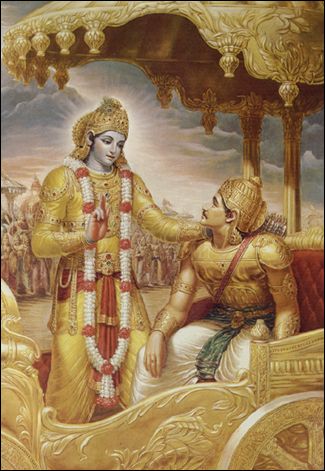
This copy of the Bhagavad-Gita As It Is was given to me by one of the more ardent Hindus living in residence not far from me during my period of studies in Wollongong in 2004. It is highly regarded by most Hindus as the standard reading and interpretation of vedantic spirituality by A.C. Bhaktivedanta Swami Pradhupada and details the discourse of Arjuna and Lord Krisna on The Battlefields of Kuruksetra. As in human experience, one must often stand opposed to the beliefs and philosophies of one's friends, neighbours, or teachers to follow the right path. As Arjuna faltered in fighting with those who were members of his community, out of concern, fear, respect, and compassion for others, a student of business often has to early decide what is necessary to be learned about business and for what purpose, what path of learning is most fruitful, which sets of ethics and principles need to be assimilated, even if it may bring one into direct conflict with those who are intimately related to personal goals and measures of success which may even be considered best practices. Best can always be improved and made better.
It is in this that my Hindu classmate often challenged me with his systems of beliefs. I would protractedly attempt not only to study my required readings, but on a parallel investigate those issues which I felt were also important, often ideas and theories which require more of a learner, easy explanation for why and how so many theories, regardless of their relevancy, often lie dormant and unexplored among students of any discipline. Especially the contemplation of cross-cultural learning, not only as a theory, but in a practice of it to profitable self-discovery.
Even he would insist that I would rise from a night of reading to an early morning sunrise and walk along the beaches of Wollongong when the city is most still, and sit among the exotic local flora and fauna in the beautiful public parks there to contemplate the path and object of success in life. His insistence was that the path explored in Baghavad-Gita is adequately success in life and the afterlife. So it recounts not only an intellectual battle for discernment between success in the material versus the needs of the spiritual world, this text explores the universal human desire for self-realisation and aspects of selflessness which add bounty to the totality of human experience. It is a path with perhaps many followers but fewer adherents or living embodiments of its message. As one of the world's most sacred texts, it bears pride of place next to all other holy books.
The Bhagavad-Gita investigates and explains ways of being, liberation from worldy desires, the derivations of karma and transcendentalism and its impact upon possible knowledge of the Supreme. In all aspects it acts as a spiritual foil which harbours little if any distinction between the purposes of religious supremacy, or an argument of one faith over another in terms of adequate spiritual fullfillment. Thus many points of the description of karma might easily be applied to the spiritual well-being of any major religious faith. Furthermore the Bhagavad-Gita demonstrates the benefits of attaining enlightenment, the ways, and the means, as to the attachment of a spiritual guru or teacher. Furthermore, it takes great strides to illustrate the qualities of wisdom, peace, detachment, spiritual enlightenment and bliss or grace, attainable by all, some would say simply desired by all, but actively pursued by so few.
This text explores the dynamics of practice towards meditative yoga, means by which to control the mind and the senses to nurture a spirit of Paramatma in the heart and attain samadhi or full conscious knowledge of the Supreme. Such aspirations are well regarded, but reading this book might not necessarily be the single key to such experiences. One would necessarily practice and develop such skills with consistency and dedication. However, even without attaining such spiritual development, it is nice to know that such a path exists at any opportunity and is here recounted. Further descriptive passages related to illustrating the cosmic universe also describe an inter-relatedness of all spirit and linkage to devotional service to the great divinity of the Supreme.
In such terms, this book is as relevant to a Christian as any other book of faith. I am firmly convinced that Christians say they seek the same things as the Bhagavas-Gita claims are possible for a human to experience and attain even in a lifetime or a series of lifetimes. However as Gandhi may be paraphrased, so many are aware of the correct path and so few take the steps to follow it as few ever desire to be that good. Cross-culturally, referring to the Bhagvad-Gita is far from likely to detract from the religious values of its readers. But it helps describe the spiritual opulence possessed by the truly faithful and will only enrich the meditations of those who turn to it in hopes of making living connections between the self, one's community, the material world and the cosmos of spiritual existence.

Wednesday, June 07, 2006

Introductory Review of Chapter One: Global Political Economy


Introductory Review of Chapter One: Global Political Economy
Robert Gilpin (2001)


This book was not perhaps my initial first choice for review out of my new pallet and I may have rushed to read this first chapter merely because I would seek to prove the purity of my research goals. Namely, if I were a true budding, academic then I would not presume to have any opinions about nearly anything and thus merely regurgitate that which I have read into a sort of news-speak and mind-set which spoke to only the peerly-reviewed few who might even read it.
My reading schedules for the last two years have taken a mammoth amount of my private life down the path of which few return to the sociable world of the common man, whose activities and interests might necessarily only ever take few moments of quizzical ponderous befuddlement prior to dismissing any topic as too complicated, too vastly irrelevant, or in words highly redundant. This might easily explain why the joys and pleasures of even reading itself have been reduced so clearly to such a small portion of an average person's daily activities. Not only are the concepts at times not always easily absorbed in their newness. Also the time spent with books detracts from the comparative attractiveness of a person to the company of comparatively pleasant people, in any completeness, especially of men with a fondness for books, at times even such an interest comes at the cost of a woman's esteem and desirable attentions.
A man's first love is almost never a woman. It is often music, or even the poetics of intellectual thought. For some it is easily sports. Some women instinctively, and intuitively understand this and accept it, much as one would accept the flaws and foibles of an artist for the qualities of his work and personal interests. There are other women of course, who think nothing of expecting a man to draw nothing from the well of himself, for himself, or even other loved ones, and everything must always be for her and her satisfaction alone. As if the well of human experience does not offer many facets to the human character and a continuously adjusting, flexibilized and extenuating sharing of the self's joys, mysteries, faiths, and creativities, not only with the mate, but with extended family and children. Not only with family, but with friends and co-workers.
The cruelty of my own preferences is that even as I age, I prefer to enter the company of women who are generally in their early twenties, emotionally raw, somewhat under-developed, at times highly irrational, I am unaffected by their often moody, gloomy, barrenly hopeless minutes. When one realizes she is not only not the first love, but not even at times my first priority then she is thus gone. So under such circumstances I wholey concur that a man who devotes himself to a greater understanding of a particular topic improves the knowledge and debate in his own mind first, and even secondarily among his supposed peers. But so rarely one remains to create a stable spiritual, financial and emotional stronghold for his wife and family, all the same, he is to be forgiven much, even if at times he fails to see the lines in her face, young or old, the ones he never recognized. When he then focuses on her at it might only ever be in awe of a woman who would tolerate and enrich such a humour and nonsense even from the beginning. To share a man's love for his work is a rare art in a woman. That which steals him from her, that which furnishes his mind with hand scored stones and plinths upon which to attempt to explore even his own understanding of it, let alone the research and amalgamation, the weighings and exemplifications of those of others just like him. That takes a pearl, a ruby, an emerald, and a diamond of a woman.
In keeping with such a soliloqy, Gilpin credits his wife's assistance, not merely as a dedication. One feels the painful hours of a divided allegiance which most women run from screaming. Probably not even one out of even one hundred women would understand and put up with this man. How he ever knew she would, obviously he has more intelligence in the ways of very few women than that which he is credited for.
When the enemy is close at hand and remains quiet, she is relying on the natural strength of her position.
If her place of encampment is easy of access, she is tendering a bait.
The rising of birds in their flight is the sign of an ambuscade.
Startled beasts indicate that a sudden attack is coming.
He who exercises no forethought but makes light of his opponents is sure to be captured by them.
(Interpretations on the Art of War or The Art of Netting a Husband)
So even perhaps more worthy is a man who reads what he has written and realises it to be completely false. As for economists such as Gilpin, who seek to paint a picture of the present, the task not only eludes, like youth, it evades. His previous work titled, "The Political Economy of International Relations" is credited by the author to be "totally outdated". Its publication in 1987 was relevant to the Cold War Era. I was amazed to receive a message from an unexpected source recommending that I read it first. Well, I continue to read Derek H. Aldcroft's "The European Economy 1914-2000" and feel as it is a historical accounting and includes extensive coverage of Marxism in its birthplaces rather than an attempt to solidfy present events it shall suffice at the moment. As well Ian Clark's reasonable synopsis of the real possibility that the tappets of economics have been stuck in the Cold War Era ever after as a root cause of my world issues within "Globalisation and Fragmentation" gives me confidence that the author not only knows what he is talking about he has the credibility and gracefulness to discourage readers from embarking upon pointless snapshots of a currency and immediacy which no longer exists.
Such outdating is nothing new to economists and their theories. However they rarely appear to admit it even to themselves let alone gleaning readers. The fact remains that the interim period of fourteen years has seen global rates of FDI multied annually by 15 to 20 times. If relevancy is measured by global investments capacities then his outdated book could be read intellectually to be about 210 years past current economic states of presentness. This would implicate that even five years on, the book I am only beginning to read is already outdated. This is the reality of academic writing. Brought to my attention almost through painful experience through the teaching-efforts of a mere engineering-type quality management expert named Lester Kirchamajer. Let it be known the target has always been the winning of absolutely and only the right wife.

Sunday, June 04, 2006

The Book of the Vedas: A Little Thin on The Vedas


Review of The Book of the Vedas: Timeless Wisdom from Indian Tradition
(A Little Thin on The Vedas) Virender Kumar Arya (2003)

First off, this is a beautifully illustrated and bound text on the world's third most popular religion. If ever there was a text to well introduce this topic to readers with no prior contact with Hindus or Hinduism then this is the book. However it does not to any great extent explore, "The Vedas" in particular. The dust jacket proclaims, "Discover the enthralling adventures of the gods and goddesses..." "...in-depth study..." "Lose yourself in the hypnotic texts..." But what in fact this book delivers are smallish reviews of well illustrated quips and clips regarding Hinduism. What it does serve is a short two pages on each topic, all of relevant concern to Hinduism. These are like side-dish entrees to vast and diverse topics such as: Holy Writings, Hindu Pantheons, Salvation, Hindu Society, and suggestions for further readings. Further readings are indeed required to gain enthrall or hypnotic awe of texts which are even only rarely described or touched upon in this book. A bit more poetic extracts would fill out the main courses...
As a reference text it has some abbreviated usage. For example, it illustrates a vast number of yogic pursuits to which previously I had no idea even existed. But it is not abounding in hypnotic texts, there is little of enthralling adventures, it would be hard to get lost in such short descriptions which read much more like a brochure on Hinduism, a very well designed and colourful one, rather than an in-depth study of any kind. However, as an illustrated dictionary it has filled in a few gaps. For example, the goddesses coupling on the Shiva Temple illustrated here at Hampi are perhaps not merely Devas but perhaps also incarnations of Shakti. I finally know what those blue men hope to be doing wandering naked around the countryside. However, other perhaps less reknowned gods such as Lord Venketeswara are noticeably absent from the listed pantheon.

Saturday, June 03, 2006

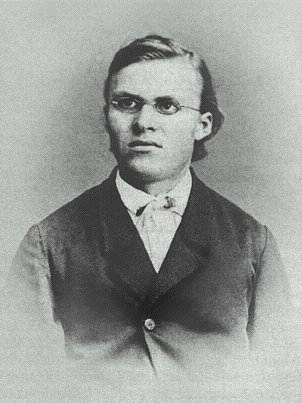
More Quotes from Montaigne and Nietzsche


More Quotes from Montaigne and Nietzsche

The appeal of these authors for those readers attempting an understanding of historical, and contemporary business practices globally may not be apparent immediately. However, the root benefits of engaging competitive advantages are based in not only a willingness to learn new frames of thought, new perspectives, but to fully engage the opportunities for complete cross-functionality in areas which are often compartmentally separated not only in the realms of learning but in general understanding of even a shallow reading of philosophy. Really, these writers easily establish that the root causes for success or failure of an individual to achieve particular goals or successes are directly related to internal processes, thoughts and cognitive constructions. The same could be said for the successes or failures of regional, or multinational business models and strategies. Which makes these writers worth reading, especially when one is planning to engage new theories or new ideas.

To which both authors have addressed that there is largely little of great newness in human experience over the ages. Montaigne makes noteworthy application of the literatures of the ancient Greeks and Romans and Nietzsche issues in his more infrequent reflections upon writers like Montaigne that novelty, "newness", and uniqueness in the ways of mankind are allusions to the blistering sameness of the challenges, strengths, and weaknesses of modern man relative to those of the ancient world.

Both seem to suggest it is only in one's own sense of self and mind where one may organize and reorder awareness and register progressive change of thought. But it often appears the efforts of global business have all been about ordering the internal intrinsics of human nature to serve their own corporate ends. This colours even the very arguments made by globally proclaimed experts on such topics. Research plainly can be manipulated easily to match the desired outcomes of those who pay for it.

Which gets to the purpose of writing and reading. Montaigne had something to say to humanity, something which has carried its relevancy down through five hundred years of tumultuous political, social, and technological changes. But in the end, he is still reflecting on a mankind which can recognize itself in his "Essays". Nietzsche himself was a writer combatant seemingly seeking to drive nails through any commonly held sense of settled complacency. While I have to admit Montaigne has more to say that is directly appealing, Nietzsche too has some interesting comments to make on human experience. As for relevancy, perhaps there are a few business people in the world who know that the key to business success is not perhaps in finding the best market niche, the best product or service. the keys to global business success may be in well leading new competitive perspectives which are often overlooked in the herd's great rush. Montaigne and Nietzsche are all about the encouraging sense of self available to individuals who break from the race and engage this great engine called the human mind in contemplation of decisions, options, choices, and possibilities.

"And indeed when insults strike to the quick, they can easily make a man who is only sluggishly pursuing his king's quarrel, enter with a different spirit into what has become his own." (Montaigne, Book One: Chapter 47, On The Uncertainty of Our Judgement, 1595)

"In this study of history one must run through all sorts of authors, both old and new, in French and in gibberish, without distinction, to learn from them the various things they teach." (Montaigne, Book Two: Chapter 10, On Books, 1595)

"It is unfortunate that wisdom forbids you to be self-satisfied and trust in yourself, and always sends you away discontented and diffident, whereas and opinionated boldness fills its possessor with joy and assurance." (Montaigne, Book Three: Chapter 8, On The Art of Conversation, 1595)

"When one trains one's conscience, it kisses one while it bites."

"When we have to change an opinion about any one, we charge heavily to his account the inconvenience he therby causes us."

"Pity has an almost ludicrous effect on a man of knowledge, like tender hands on a Cyclops." (Friedrich Nietzsche, Beyond Good and Evil, Apothegms and Interludes, 1886)

What I read of these authors easily defies my ability to compare them which is not easily said of most business texts. However both have much to say about business. Fortunately few appear to be researching historical business patterns in such a manner to often suggest new ones thus based through such precedences.


Friday, June 02, 2006

A new palette of books has arrived.

A new palette of books has arrived. Therefore I have become quite distracted and wish I had multifaceted eyes. Furthermore, I really need to read these before the beginning of next semester.

Global Political Economy (2001) Robert Gilpin
The Globalization Reader (2004) Frank J. Lechner and J. Boli (Eds.)
Remapping East Asia (2005) T.J. Pempel (Ed.)

Why Globalisation Works (2005) Martin Wolf
Uncle Tom's Cabin (1852) Harriet Beecher Stowe

The Vedas (2003) T.B. Griffith
Beyond Machiavelli: Tools for Coping with Conflict (1996) Roger Fisher
Getting Together: Building Relationships as We Negotiate (1988) Roger Fisher
Tales for the Dying: The Death Narrative of the Bhagavata-Purana (2003) Rick Jarow
The Wisdom of Teams: Creating the High-Performance Organization (2003) Jon Katzenbach and Douglas Smith
Real Change Leaders: How You Can Create Growth and High Performance at Your Company (1997) Katzenbach, Gagnon and Beckett
The Keys to Conflict Resolution: Proven Methods of Resolving Disputes Voluntarily (2001) Theodore Kheel
Management Consulting: Emergence and Dynamics of a Knowledge Industry (2003) Matthias Kipping
The Upanishads, Vol. 1 (1962) Max Muller
The Diversity Advantage: Multi Ethnic Identity in the New World Economy (2003) Zachary G. Pascal
Remapping East Asia (2005) T.J. Pempel (Ed.)
Why Globalisation Works (2005) Martin Wolf
The Leadership Engine: How Winning Companies Build Leaders at Every Level (2002) Noel M. Tichy and Eli Cohen